
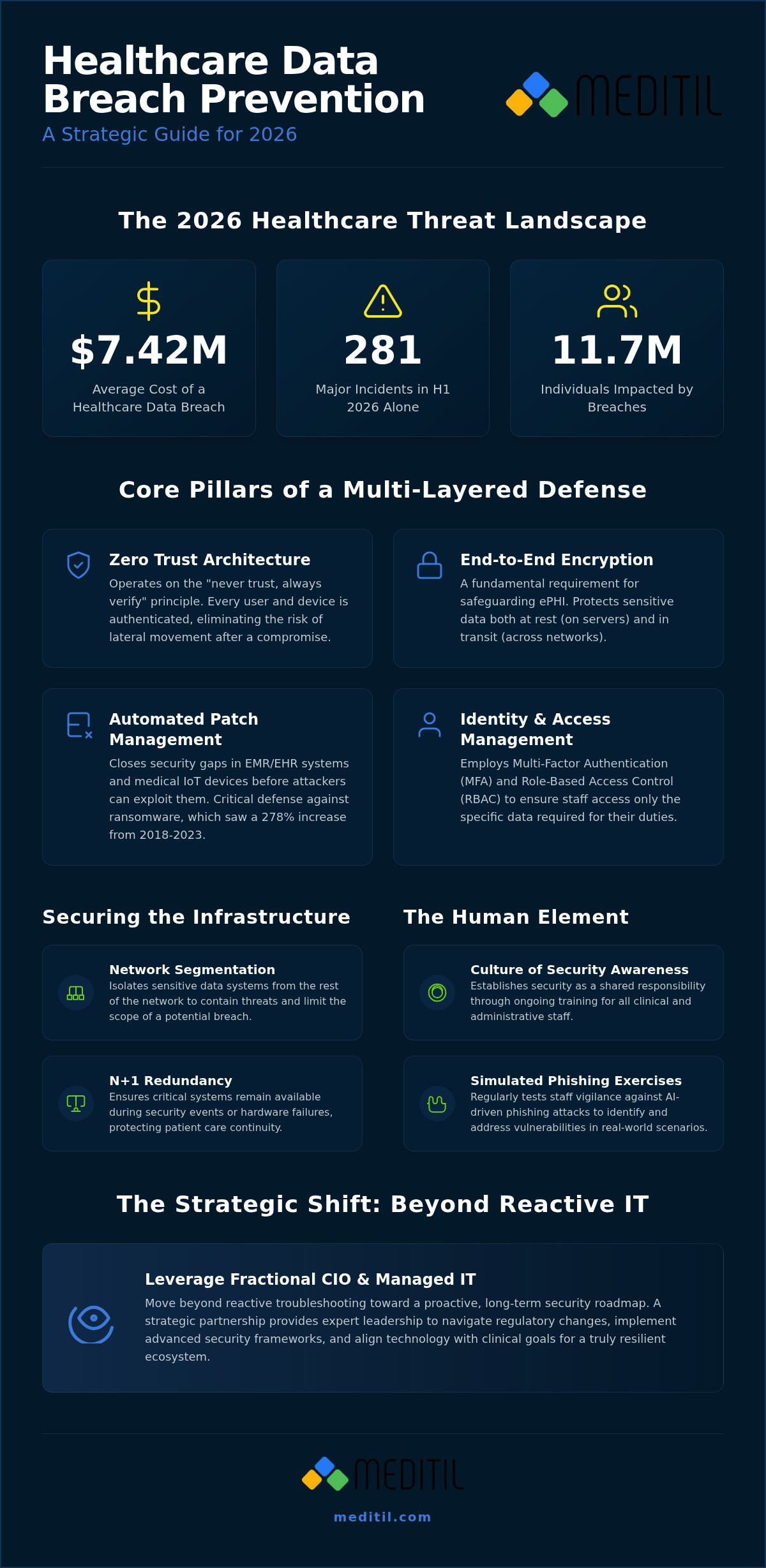
With the average healthcare data breach cost reaching $7.42 million and 281 major incidents recorded in the first half of 2026 alone, the margin for error in healthcare data breach prevention has effectively vanished. You understand that a single vulnerability can lead to massive HIPAA fines and irreparable reputational damage. Managing complex security across multiple clinical platforms often feels like a choice between total lockdown and operational efficiency. It’s exhausting to defend against the increasing sophistication of AI-driven cyberattacks while trying to keep your focus on patient outcomes.
This strategic guide empowers you to master the technical, operational, and strategic frameworks necessary to protect sensitive patient data. Our mission is to help you move beyond reactive software toward a managed, resilient ecosystem where security enables rather than hinders clinical excellence. We provide a steady hand to help you maintain stability while advancing your digital infrastructure and protecting your reputation.
We’ll examine the 2026 HIPAA Security Rule updates and provide a clear roadmap for building a secure IT environment. You’ll learn how to implement Zero Trust principles and proactive monitoring to ensure your organization remains both compliant and productive within a shifting threat environment.
Key Takeaways
- Identify the specific methodologies used in AI-driven phishing and automated vulnerability exploitation to better protect life-critical medical systems.
- Master the deployment of Zero Trust architecture and end-to-end encryption to create a resilient, multi-layered defense across all clinical endpoints.
- Design a secure infrastructure using network segmentation and N+1 redundancy to isolate sensitive data and ensure constant availability during security events.
- Optimize your healthcare data breach prevention strategy by establishing a culture of security awareness and testing staff vigilance through simulated phishing exercises.
- Leverage fractional CIO leadership and managed IT services to move beyond reactive troubleshooting toward a strategic, long-term security roadmap.
The 2026 Healthcare Threat Landscape: Why Proactive Prevention is Mandatory
The threat environment in 2026 has reached a critical tipping point. During the first six months of this year, 281 healthcare data breaches were recorded, impacting 11.7 million individuals. These aren’t just numbers on a spreadsheet. They represent a record-breaking surge in malicious activity. Ransomware attackers have shifted their focus toward life-critical medical systems, understanding that the urgency of patient care provides maximum leverage. The rise of AI-powered phishing has further complicated the defense, as attackers now use automated vulnerability exploitation to find weaknesses in clinical platforms faster than human teams can patch them.
Relying on a “set it and forget it” security model is no longer a viable strategy for modern medical practices. Effective healthcare data breach prevention demands a managed, vigilant ecosystem. Hackers now use sophisticated algorithms to identify technical debt within your network, targeting legacy software and unmanaged endpoints. If your security strategy doesn’t evolve in real-time, you’re essentially leaving the door unlocked for sophisticated actors who never sleep.
The Financial and Clinical Cost of Inaction
The price of a security failure is staggering. The average healthcare breach cost reached $7.42 million in 2025. Beyond the direct expenses of remediation and legal fees, a PHI leak inflicts long-term reputational damage. Patient trust is your most valuable asset. Once it’s gone, recovery is difficult. For a comprehensive medical data breach overview, it’s clear that the black market value of health data remains a primary driver for these attacks. Data corruption can lead to incorrect diagnoses or delayed treatments, directly linking IT security to patient safety outcomes.
Regulatory Evolution: HIPAA and Beyond
Regulatory bodies have responded to this crisis with increased scrutiny. In 2026, the Office for Civil Rights (OCR) has intensified its enforcement, moving toward a model of proactive risk management rather than reactive punishment. High-profile settlements, such as the $552,250 penalty against OSF Healthcare System, demonstrate that even established organizations can fall short. General IT providers often overlook the specific regulatory nuances of the medical sector, such as Business Associate Agreements and specialized encryption standards. Partnering with a specialist ensures that your healthcare data breach prevention strategy aligns with current federal mandates and protects your organization from devastating fines.
Core Pillars of Healthcare Data Breach Prevention: A Multi-Layered Defense
Effective healthcare data breach prevention in 2026 relies on the transition from traditional perimeter security to a Zero Trust Architecture. This model operates on the principle of “never trust, always verify,” requiring every user and device to be authenticated regardless of their location within the network. By treating every access request as a potential threat, you eliminate the risk of lateral movement that often follows a single point of compromise. This framework ensures that clinical and administrative endpoints remain isolated, protecting the integrity of the entire ecosystem.
Data protection must be absolute. Implementing end-to-end encryption for information both at rest and in transit is a fundamental requirement for safeguarding electronic protected health information (ePHI). Additionally, automated patch management for EMR/EHR systems and medical IoT devices is critical. Since ransomware attacks increased by 278% between 2018 and 2023, leaving known vulnerabilities unpatched is a risk no practice can afford. Regular, automated updates close security gaps before attackers can exploit them, maintaining a stable environment for physician productivity.
Identity and Access Management (IAM)
Strict identity verification is the first line of defense. Multi-Factor Authentication (MFA) is now a non-negotiable standard for every user accessing the network. By pairing MFA with Role-Based Access Control (RBAC), you ensure that staff members only access the specific data required for their clinical or administrative duties. This minimizes unnecessary exposure of sensitive records and aligns with official HIPAA Security Rule requirements regarding technical safeguards. Managing third-party and vendor access is equally vital. Each external connection must be verified and limited to prevent supply chain vulnerabilities from reaching your internal systems.
Advanced Threat Protection and SIEM
Modern defense requires more than just passive firewalls. Security Information and Event Management (SIEM) platforms now utilize AI-driven analytics to detect anomalous behavior in real time. These systems identify patterns that suggest a breach is in progress, such as unusual data exfiltration or unauthorized login attempts. Proactive 24/7 monitoring allows for immediate intervention, stopping a threat before it spreads through the clinical network. Integrating threat intelligence specific to medical sector vulnerabilities helps your team stay ahead of attackers who target specialized healthcare software. If you’re looking to strengthen your organization’s resilience, our cybersecurity and compliance services provide the expert oversight needed to manage these complex systems effectively.
Securing the Infrastructure: Resilient Networking for Medical Data
Building a resilient network is the foundation of effective healthcare data breach prevention. We design infrastructure with N+1 redundancy to ensure that critical systems remain available during security events or hardware failures. This methodology requires having at least one independent backup for every vital component in the network chain. In hybrid cloud environments, security best practices include using dedicated, encrypted tunnels for all traffic moving between on-premises servers and cloud providers. This ensures that data remains protected as it traverses different environments.
Network segmentation is a non-negotiable requirement for modern practices. You shouldn’t allow guest Wi-Fi traffic to mingle with the clinical data environment. By isolating these segments, you prevent a compromised personal device in the waiting room from accessing the core network where patient records reside. Additionally, maintaining regular, immutable backups is your last line of defense. If a ransomware event occurs, immutable backups ensure that your data can’t be deleted or encrypted by the attacker. This allows for a rapid and reliable disaster recovery process that minimizes downtime.
Network Security and Interoperability
Modern medicine requires constant data exchange between disparate clinical systems. Ensuring secure interoperability relies on the use of secure APIs that include strict authentication and data validation protocols. These standards prevent data leaks during the exchange of information between EHRs and third-party applications. Professional healthcare cybersecurity services stabilize the network by providing the continuous oversight and technical precision needed to manage these complex integrations. This approach directly supports compliance with HIPAA Security Rule requirements for technical safeguards and audit controls.
Managing Technical Debt and Infrastructure Lifecycle
Technical debt represents a significant vulnerability in healthcare data breach prevention strategies. Legacy hardware that no longer receives manufacturer security updates must be identified and decommissioned. These older systems are often the primary entry points for attackers seeking a path of least resistance. The proliferation of unmanaged medical devices (IoMT) on the main network adds another layer of risk. Each device, from infusion pumps to heart monitors, requires its own security profile and should reside on a dedicated network segment. Strategic planning for infrastructure upgrades ensures that your technology stack supports your security goals without disrupting physician workflows or patient care.
The Human Element: Actionable Guidance for Clinical Staff
Technical infrastructure is only as strong as the individuals who operate it. In the first half of 2026, malicious insider activity saw a significant increase, with 21 recorded incidents compared to only three in all of 2025. This trend underscores why healthcare data breach prevention must involve a deep focus on the human element. Establishing a culture of security awareness begins with leadership. When administrators and department heads demonstrate a commitment to data integrity, it sets a standard for the entire clinical team. This mission-driven approach ensures that security isn’t viewed as a hurdle, but as a vital component of patient safety.
Conducting regular, simulated phishing exercises is essential for testing staff vigilance. These simulations help employees recognize the increasingly sophisticated, AI-driven social engineering tactics used by modern attackers. For organizations looking to formalize their approach, Centrum voor IT provides specialized AI training and policy development to strengthen the human firewall. Alongside these tests, you must create clear, simple protocols for reporting suspicious digital activity. If a staff member clicks a malicious link, they should know exactly who to contact immediately. Ongoing HIPAA training also plays a critical role in reducing accidental disclosures, keeping compliance requirements fresh in the minds of busy clinicians during their daily routines.
Reducing Friction in Security Protocols
We recognize that clinical workflows are high-pressure environments. Security measures that create too much friction can lead to “workarounds” that compromise the network. Balancing strong protection with fast physician login requirements is a priority. Implementing Single Sign-On (SSO) provides a solution by improving both security and workflow, allowing clinicians to move between systems without managing dozens of complex passwords. Our managed it services for healthcare support staff efficiency by integrating these seamless access points. This ensures your team stays productive while maintaining a secure, compliant environment.
Incident Response Planning for the Clinical Team
Preparing for a potential event is just as important as healthcare data breach prevention itself. Your clinical team needs an incident response plan that defines clear roles during a suspected security compromise. Regular “tabletop” exercises allow staff to practice these responses in a controlled environment. These drills focus on maintaining clinical continuity even during a network lockdown or system isolation. Knowing how to provide care when digital tools are limited prevents panic and ensures patient stability. If you’re ready to strengthen your team’s preparedness, our IT consulting and advisory services can help you develop a customized response framework tailored to your practice.
Strategic Partnership: Managed IT and Virtual CIO Leadership
Transitioning from technical controls to high-level strategy is the final step in securing a medical practice. While encryption and Zero Trust are the essential tools of the trade, strategic leadership acts as the architect for the entire system. Many organizations struggle because their IT approach is fundamentally reactive, waiting for a failure before taking action. This “break-fix” mentality is a significant vulnerability in healthcare data breach prevention. A specialized partner provides a steady hand at the wheel, ensuring every infrastructure update and security patch aligns with both clinical goals and regulatory standards. By offloading these complexities to experts, internal teams can refocus on patient care without the constant fear of a HIPAA violation.
Specialized healthcare IT partners reduce the burden on your staff by providing a level of precision that generalists often lack. They understand the nuances of interoperability and the specific ways that medical data flows through a network. This expertise allows for a more stable environment where technology serves the mission of the practice rather than becoming a source of friction. It’s about building a partnership based on trust and technical excellence.
The Role of the Virtual CIO in Prevention
A fractional or virtual CIO acts as a proactive guide for your organization. Rather than just managing daily tickets, they develop a comprehensive 3-year strategic roadmap for security and compliance. This long-term view is essential for staying ahead of the evolving threat landscape. They also manage the IT budget to prioritize high-impact security investments, ensuring resources go where they’ll provide the most protection. You can learn how virtual cio services provide leadership without the full-time salary, giving your practice access to enterprise-level expertise at a predictable cost.
Building a Resilient Managed Ecosystem
A truly resilient environment integrates help desk support with proactive security monitoring. This creates a feedback loop where everyday technical issues are analyzed for potential security implications. For specialized security projects, an augmented IT team provides the extra bandwidth needed to implement complex systems like SIEM without disrupting daily operations. This managed ecosystem positions your practice for long-term growth by creating a stable technology foundation. It’s a move from constant firefighting to a state of disciplined, predictable advancement. When your technology is stable and your strategy is sound, your focus remains entirely on patient outcomes.
Securing the Future of Patient Care through Strategic Resilience
The 2026 threat landscape demands a transition from reactive troubleshooting to a disciplined, managed ecosystem. Success in healthcare data breach prevention requires more than just software; it necessitates a multi-layered strategy that integrates Zero Trust architecture with resilient network infrastructure and a vigilant clinical staff. By addressing technical debt and prioritizing strategic leadership, your practice can maintain both HIPAA compliance and operational stability. This proactive stance ensures your organization isn’t just defending against attacks but is actively building a foundation for sustainable growth.
Partnering with a steady hand ensures your digital foundation remains secure while you focus on clinical excellence. MEDITIL provides comprehensive managed IT for the healthcare sector, mission-driven cybersecurity specialists, and strategic fractional CIO leadership to guide your long-term roadmap. We’re committed to helping you build a resilient environment that protects your patients and your reputation. It’s time to move toward a future where technology serves as a reliable partner in delivering superior medical care.
Secure Your Clinical Infrastructure with MEDITIL
Frequently Asked Questions
What is the most common cause of healthcare data breaches?
Human error and social engineering remain the leading causes of security failures in the medical sector. Phishing scams and stolen credentials allow attackers to bypass technical defenses by exploiting staff members. While ransomware is the most visible threat, the “human element” often provides the initial entry point for malicious actors. Robust training and a culture of vigilance are just as vital as firewalls in a comprehensive healthcare data breach prevention strategy.
How does a Fractional CIO help prevent data breaches in a medical practice?
A Fractional CIO provides strategic leadership by aligning your IT infrastructure with specific clinical goals. They develop long-term security roadmaps and manage budgets to prioritize high-impact protection over reactive repairs. This role ensures a “steady hand at the wheel” for regulatory compliance and risk management. By having executive-level expertise without a full-time salary, practices gain a proactive guide for complex security decisions and infrastructure upgrades.
Is HIPAA compliance the same as being secure from hackers?
No, HIPAA compliance is a regulatory baseline rather than a guarantee of total security. Compliance focuses on meeting specific administrative, physical, and technical safeguards defined by federal law. Hackers constantly evolve their methods to bypass these standard controls. True security requires a proactive, managed ecosystem that goes beyond “checkbox” compliance to include real-time monitoring, advanced threat detection, and a resilient infrastructure that adapts to new threats.
What are the first steps a clinic should take after discovering a breach?
Immediate isolation of the affected systems is the critical first step to prevent the threat from spreading through the network. You should then activate your incident response plan and contact your IT security partner to begin a forensic analysis. Following containment, legal counsel should be consulted to manage reporting requirements to the Office for Civil Rights (OCR) and affected patients as mandated by the HIPAA Breach Notification Rule.
Can small medical practices afford enterprise-level cybersecurity?
Yes, through managed IT services, small practices can access enterprise-grade security tools and expert oversight at a predictable cost. Working with a specialist like Microtech allows clinics to share the resources of sophisticated infrastructure like SIEM and 24/7 monitoring. This approach provides a resilient defense that was previously only available to large hospital systems. It’s a cost-effective way to maintain stability, ensure data integrity, and protect patient trust without a massive capital investment.
AI serves as both a tool for attackers and a critical component of modern defense. Malicious actors use AI to automate vulnerability scans and create highly convincing phishing content. In response, healthcare data breach prevention systems now utilize AI-driven analytics to detect anomalous behavior in real time. These defensive systems identify patterns that human teams might miss, allowing for faster intervention and more precise threat mitigation across the clinical network.
What is the role of EMR/EHR systems in data security?
EMR and EHR systems are the central repositories for sensitive patient data, making them primary targets for exploitation. While software vendors provide built-in security features, the practice is responsible for the secure implementation and integration of these systems. This includes managing user access via multi-factor authentication, ensuring end-to-end encryption, and maintaining automated patch management to close vulnerabilities. Proper integration ensures that data remains secure during interoperability and information exchange.
How often should a healthcare organization conduct a security risk assessment?
A formal security risk assessment should be conducted at least annually or whenever a significant change occurs in the IT environment. This includes implementing new software, changing hardware, or updating clinical workflows. Regular assessments identify new vulnerabilities and ensure that your security controls remain effective against the evolving threat landscape. Continuous monitoring provided by a managed partner serves as an additional layer of daily verification to maintain a secure environment.