A Clinical Decision Support System is only as intelligent as the data it can access in real time. For many healthcare organizations, the promise of data-driven medicine is often undermined by incompatible legacy standards and fragmented software ecosystems. You’ve likely seen how poorly configured systems lead to physician alert fatigue rather than better patient outcomes. It’s frustrating when technical silos stand in the way of clinical excellence and operational stability.
This guide outlines the strategic requirements for successful integration in 2026. By utilizing specialized clinical systems interoperability consulting, your organization can bridge the gap between complex medical logic and technical infrastructure. You’ll learn how to build a resilient environment that supports real-time insights, improves regulatory compliance, and reduces medical errors through evidence-based recommendations. We’ll examine the evolving FHIR standards, the necessity of fractional CIO leadership during vendor selection, and the specific technical milestones required for a seamless, enterprise-wide CDSS deployment.
Key Takeaways
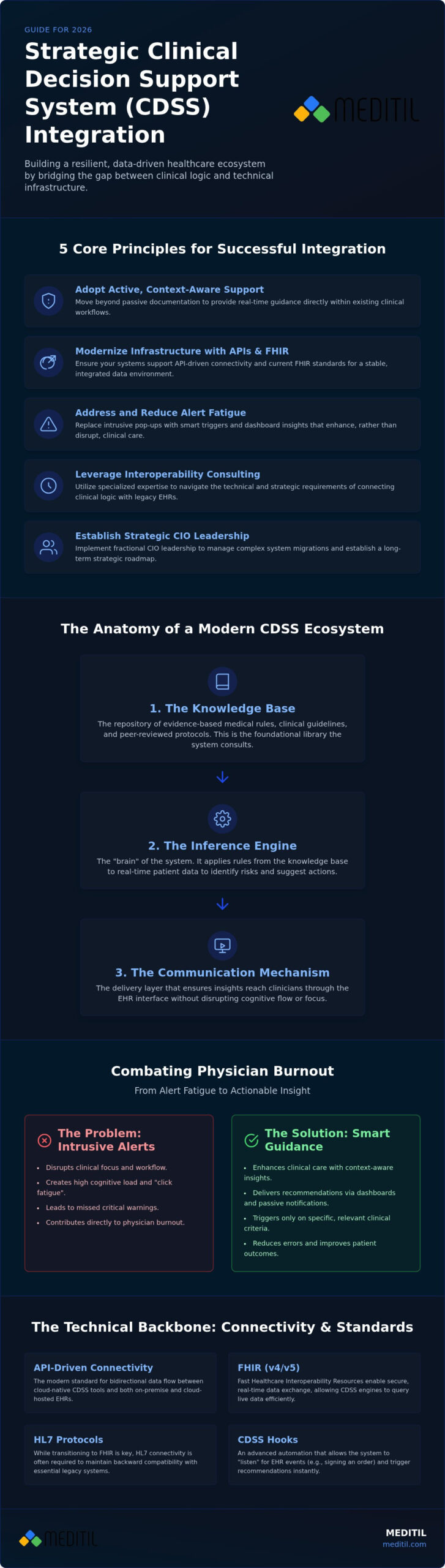
- Move beyond passive documentation by adopting active, context-aware clinical decision support that provides real-time guidance within existing workflows.
- Ensure your infrastructure supports API-driven connectivity and current FHIR standards to maintain a stable, integrated environment across all data sources.
- Address physician alert fatigue by replacing intrusive pop-ups with smart triggers and dashboard insights that enhance rather than disrupt clinical care.
- It’s vital to leverage clinical systems interoperability consulting to navigate the technical and strategic requirements of connecting clinical logic with legacy EHRs.
- Establish a long-term strategic roadmap through fractional CIO leadership to manage complex system migrations without compromising operational efficiency or compliance.
What is Clinical Decision Support System Integration in 2026?
In 2026, Clinical Decision Support System (CDSS) integration represents the seamless connection of advanced clinical logic engines with Electronic Health Records (EHR) to deliver real-time, actionable guidance. It isn’t merely about data exchange; it’s about transforming raw patient information into precise clinical insights. This evolution marks a definitive shift from passive CDSS, which relied on static documentation and manual searches, to active CDSS. These modern systems utilize dynamic, context-aware alerts that trigger only when specific clinical criteria are met. Professional clinical systems interoperability consulting ensures these engines work in harmony with your existing infrastructure rather than against it.
In the United States, this integration serves as the backbone of modern value-based care models. By embedding safety protocols directly into the clinician’s workflow, integrated systems significantly reduce diagnostic errors. This proactive approach ensures that every decision is backed by the latest medical research, protecting both the patient and the provider. When clinical logic is deeply integrated, it moves from being a peripheral tool to a core component of the care delivery process, fostering a culture of safety and precision.
The Core Components of a CDSS Ecosystem
A functional CDSS architecture relies on three distinct layers working in unison to provide value at the point of care:
- The Knowledge Base: This is the repository where evidence-based medical rules, clinical guidelines, and peer-reviewed protocols reside. It’s the foundational library the system consults.
- The Inference Engine: Acting as the system’s brain, this component applies the rules from the knowledge base to specific, real-time patient data to identify potential risks or opportunities.
- The Communication Mechanism: This layer handles delivery, ensuring insights reach clinicians through the EHR interface without disrupting their primary focus or cognitive flow.
Why Integration Fails Without Strategic IT Oversight
Many organizations treat CDSS as a peripheral feature, which frequently results in data silos and significant system latency. When integration lacks a strategic foundation, it creates workflow bottlenecks that frustrate physicians and diminish the clinical quality of the tool. Successful deployment requires aligning your clinical logic with comprehensive managed it services for healthcare. Without this alignment, the system cannot scale or adapt to changing regulatory requirements. Expert clinical systems interoperability consulting helps identify these infrastructure gaps early, ensuring that your CDSS provides a steady hand in clinical decision-making rather than becoming a source of technical friction.
The Technical Architecture of CDSS and EHR Connectivity
Modern connectivity relies on a sophisticated integration layer that acts as the translator between clinical logic and raw data. In 2026, clinical systems interoperability consulting focuses on creating a bidirectional flow between clinical software and diverse data sources. This ensures that when a clinician opens a patient record, the CDSS can pull from labs, imaging, and history simultaneously without introducing system latency. It isn’t just about moving data; it’s about ensuring that data is usable and contextually relevant the moment it’s needed.
API-driven connectivity is the standard for modern healthcare environments. Cloud-native CDSS tools must interact seamlessly with both on-premise and cloud-hosted EHRs. This hybrid approach requires precise data integrity and synchronization across every clinical touchpoint. If data isn’t synchronized in real-time, the clinical logic may rely on outdated information. This leads to incorrect or irrelevant alerts that frustrate staff and undermine trust in the system. Maintaining a stable, synchronized environment is the primary technical hurdle for most growing practices.
Leveraging FHIR and HL7 Standards
CDSS Hooks represent a significant advancement in automation. They allow the system to “listen” for specific EHR events, such as opening a record or signing a prescription order, and trigger recommendations instantly. While many organizations are transitioning to FHIR v4 or v5, legacy system connectivity often still requires HL7 protocols to maintain backward compatibility. FHIR enables secure, real-time data exchange by allowing CDSS engines to query specific resources without transferring entire patient files. This targeted approach reduces the load on your network and ensures that only the necessary information is processed for each decision point.
Interoperability: The Foundation of Integration
True integration requires breaking down the silos that exist between labs, imaging centers, and primary care records. A virtual CIO plays a critical role here by designing an interoperability architecture that aligns with long-term clinical goals. This leadership ensures that security protocols are strictly followed for data in transit during real-time CDSS processing. Protecting sensitive patient data while maintaining high-speed connectivity is a complex balancing act that requires a steady, expert hand at the wheel. If your organization is struggling to manage these technical layers, professional clinical systems interoperability consulting can provide the strategic roadmap needed for a stable, integrated environment.
Solving the Physician Burnout Crisis: Alert Fatigue and Integration Logic
The cost of over-integration is often measured in physician burnout and a measurable decline in clinical quality. While the primary goal of any CDSS is to enhance patient safety, a system that is too sensitive bombards clinicians with irrelevant notifications. This phenomenon, known as alert fatigue, creates a dangerous environment where critical warnings are accidentally ignored alongside minor ones. Professional clinical systems interoperability consulting focuses on refining the integration logic to ensure that only high-value, evidence-based insights reach the end user. Moving from interruptive pop-ups to integrated dashboard insights allows doctors to maintain their focus on the patient. It’s a strategic shift toward technical optimization that respects the clinician’s cognitive load and preserves the integrity of the diagnostic process.
User-centric design in the CDSS interface is no longer optional; it’s a requirement for system adoption. When tools are designed with the clinician’s workflow in mind, they reduce technical friction and improve overall satisfaction. A stable, well-configured environment ensures that the technology acts as a partner in care delivery. By prioritizing the user experience, organizations can transform a burdensome software requirement into a valuable clinical asset that supports long-term operational goals. To achieve this balance across your entire organization, you can explore AI and Human Workforce Consulting & Integration and build a more automated, effective workforce.
Effective integration requires a highly structured, tiered approach to notification. Alerts must be categorized into distinct levels such as critical, informational, and educational to prevent sensory overload. Modern 2026 systems leverage machine learning algorithms to suppress low-value alerts by analyzing clinician behavior and specific patient contexts over time. For instance, an alert for a potential drug-drug interaction is only truly actionable if both medications are active within the current patient encounter. By ensuring every notification is contextual and precise, healthcare organizations can restore physician trust in the CDSS infrastructure. This precision is a direct result of meticulous technical configuration and ongoing system verification.
Workflow Integration Best Practices
A 5-Step Strategic Roadmap for CDSS Integration
Integrating a Clinical Decision Support System (CDSS) into a complex healthcare ecosystem requires more than just a software license. It demands a disciplined framework that aligns clinical objectives with technical capabilities. This roadmap provides a steady hand for organizations looking to move from fragmented systems to a cohesive, data-driven environment. Following a methodical progression ensures that the final deployment is both stable and clinically relevant.
- Step 1: Clinical Needs Assessment and Objective Setting. Identify the specific medical outcomes you intend to improve, such as reducing medication errors or enhancing preventive care screenings.
- Step 2: IT Infrastructure Audit and Gap Analysis. Perform a thorough evaluation of your current network, server, and storage capabilities to identify potential bottlenecks.
- Step 3: Vendor Selection and Interoperability Testing. Validate that third-party logic engines meet your specific technical requirements and can communicate via modern API standards.
- Step 4: Pilot Deployment and Workflow Calibration. Test the system in a controlled clinical setting to ensure the logic triggers correctly without disrupting physician workflows.
- Step 5: Enterprise Rollout and Continuous Performance Monitoring. Scale the solution across the organization while maintaining a feedback loop for ongoing optimization.
Phase 1: Assessing Infrastructure Readiness
Network stability is the foundation of real-time decision support. High-volume API calls require consistent bandwidth and low latency to prevent system timeouts during critical patient encounters. You must also ensure that your healthcare cybersecurity services are robust enough to handle the increased data exchange between the EHR and external logic engines. Legacy hurdles, such as outdated server hardware or incompatible database schemas, often cause significant latency if not addressed early in the audit phase. Identifying these technical debts allows for a proactive approach to infrastructure modernization.
Phase 2: Execution and Governance
Successful execution relies on strong, cross-functional governance. Forming an integration committee that includes IT specialists, clinical leaders, and administrative stakeholders ensures that everyone is aligned on the project’s direction. This group should establish clear KPIs to measure success, such as a measurable reduction in hospital readmissions or a decrease in time-to-diagnosis for critical conditions. Aligning these implementation timelines with your strategic IT budgeting prevents unexpected financial strain and ensures resource availability throughout the rollout. This structured oversight keeps the project on track and ensures the system delivers its promised clinical value.
If your organization is ready to modernize its clinical infrastructure, our team provides expert clinical systems interoperability consulting to guide you through every stage of this strategic roadmap. We’ll help you navigate the complexities of integration to ensure a stable and high-performing environment.
Managing CDSS Complexity with MEDITIL’s Strategic IT Services
Successful CDSS integration requires a strategic partner rather than just a software license. While the software provides the clinical logic, the underlying infrastructure determines whether that logic is accessible, secure, and reliable. MEDITIL acts as a steady hand during complex clinical system migrations, ensuring that technical transitions don’t disrupt patient care. We focus on building a resilient environment where clinical systems interoperability consulting serves as the bridge between raw data and actionable medical insights. This partnership approach ensures that your technology stack evolves alongside changing regulatory standards and clinical needs.
The value of fractional CIO leadership is particularly evident when aligning IT roadmaps with clinical outcomes. Mid-sized practices often lack the resources for a full-time executive but still require high-level strategic guidance to navigate the vendor landscape. A fractional CIO provides independent advice on CDSS-EHR compatibility, helping you avoid vendor lock-in and ensuring that every technical investment supports your long-term goals. This disciplined oversight ensures that your infrastructure remains stable while you scale your clinical capabilities.
Infrastructure as a Service for CDSS
Building the robust network architecture required for high-volume clinical data exchange is a technical necessity. Our managed IT services provide the foundation for these systems, ensuring 24/7 uptime for life-critical decision support. We implement proactive monitoring to identify and resolve potential issues before they cause system downtime during critical patient care moments. Additionally, we deploy customized cybersecurity layers designed specifically to protect sensitive Protected Health Information (PHI) within the CDSS workflow. This comprehensive approach to infrastructure protection allows clinicians to trust the data they receive without worrying about system latency or security breaches.
Strategic Consulting and Interoperability
Interoperability extends beyond clinical logic to include administrative and financial workflows. We help organizations optimize medical billing automation alongside their clinical support systems to create a unified data environment. This holistic view of the practice ensures that data flows seamlessly from the point of care to the billing office without manual intervention. To guarantee long-term success, we also prioritize training and support for your clinical staff. By ensuring your team is ready to leverage new data insights effectively, we turn complex technology into a practical tool for improving patient outcomes. Expert clinical systems interoperability consulting ensures that every piece of your healthcare infrastructure works in harmony to support a high-performing medical practice.
Building a Resilient Future for Clinical Decision Support
Modernizing your clinical infrastructure is a strategic necessity for ensuring patient safety and operational stability. By transitioning toward active, context-aware decision support and adhering to the latest FHIR standards, you create an environment where data serves the clinician rather than creating a burden. Successful integration requires balancing technical precision with a deep understanding of medical workflows to prevent alert fatigue and ensure long-term system adoption. This methodical approach transforms fragmented software into a cohesive asset that supports value-based care models.
Navigating these complexities requires a steady hand and specialized expertise. Our team provides the managed IT services and fractional CIO leadership needed to align your technical roadmap with clinical excellence. We are specialists in interoperability and EHR integration, ensuring your systems remain stable, secure, and compliant. If you’re ready to transform your infrastructure into a high-performing asset, Secure Your Clinical Roadmap with MEDITIL’s Strategic IT Consulting today. Professional clinical systems interoperability consulting ensures every technical detail is handled with precision, allowing you to focus on delivering exceptional patient outcomes with confidence.
Frequently Asked Questions
What is the primary goal of clinical decision support system integration?
The primary goal is to provide real-time, evidence-based guidance to clinicians at the point of care to improve patient outcomes. By connecting clinical logic engines with Electronic Health Records (EHR), integration ensures that relevant medical knowledge is applied to specific patient data without manual searches. This reduces diagnostic errors, enhances patient safety protocols, and supports value-based care models by aligning treatment plans with current clinical guidelines and best practices.
How does FHIR improve the integration of CDSS with existing EHRs?
FHIR (Fast Healthcare Interoperability Resources) improves integration by providing a standardized, API-driven framework for data exchange. It allows CDSS engines to query specific patient resources, such as lab results or medications, rather than transferring entire records. This targeted approach reduces network latency and ensures that context-aware alerts are delivered instantly. In 2026, FHIR v4 and v5 standards enable CDSS Hooks to trigger recommendations automatically based on specific events within the EHR workflow.
Can CDSS integration reduce medical malpractice risks for my practice?
Yes, integrating a CDSS can significantly reduce medical malpractice risks by providing a documented layer of evidence-based decision-making. These systems act as a safety net, identifying potential drug interactions, allergic reactions, or missed diagnostic steps that could lead to medical errors. By utilizing professional clinical systems interoperability consulting, your practice ensures that these safety protocols are technically sound and consistently applied, demonstrating a commitment to high-quality care standards and proactive risk management.
What are the biggest technical barriers to CDSS implementation in 2026?
The most common technical barriers include fragmented data silos, incompatible legacy software standards, and system latency caused by poor network architecture. Many practices struggle with integrating modern, cloud-native CDSS tools with older on-premise EHR systems. These challenges often lead to data synchronization issues or slow response times, which can disrupt clinical workflows. Overcoming these hurdles requires a strategic infrastructure audit and precise configuration of the integration layer between disparate data sources.
How much does it cost to integrate a clinical decision support system?
The cost of integration varies based on the complexity of your existing infrastructure and the scope of the clinical logic required. Typical expenses include technical implementation fees, interoperability testing, and ongoing managed IT support to ensure 24/7 uptime. While we don’t quote specific prices, organizations should budget for project-based consulting and potential infrastructure upgrades. Investing in fractional CIO leadership helps manage these costs by ensuring vendor selection aligns with your long-term financial roadmap.
Is CDSS integration required for HIPAA compliance?
While CDSS integration itself isn’t a direct requirement of HIPAA, the way data is exchanged between systems must strictly adhere to compliance standards. Protecting Protected Health Information (PHI) during real-time processing requires robust encryption and secure API connections. Expert clinical systems interoperability consulting ensures that your integration architecture includes customized cybersecurity layers. This protects sensitive data in transit and ensures that your decision support workflows don’t create new vulnerabilities in your compliance posture.
What is the difference between CDSS and EHR?
An Electronic Health Record (EHR) is a digital repository of patient health information, while a Clinical Decision Support System (CDSS) is a logic engine that provides active guidance. The EHR stores the data; the CDSS analyzes that data to offer recommendations, such as medication alerts or diagnostic suggestions. Integration connects these two distinct systems, allowing the CDSS to listen to the EHR and provide insights exactly when the clinician needs them during a patient encounter.
How do I prevent alert fatigue after integrating a new CDSS?
Preventing alert fatigue requires designing smart, tiered notification systems that prioritize critical safety warnings over informational updates. You should implement logic that suppresses low-value alerts based on specific clinical contexts or clinician behavior. Moving away from interruptive pop-ups toward integrated dashboard insights helps maintain focus on the patient. Establishing continuous feedback loops between your IT team and clinical staff allows for regular rule tuning, ensuring the system remains helpful rather than burdensome.